The Growing Water Demand Behind Artificial Intelligence
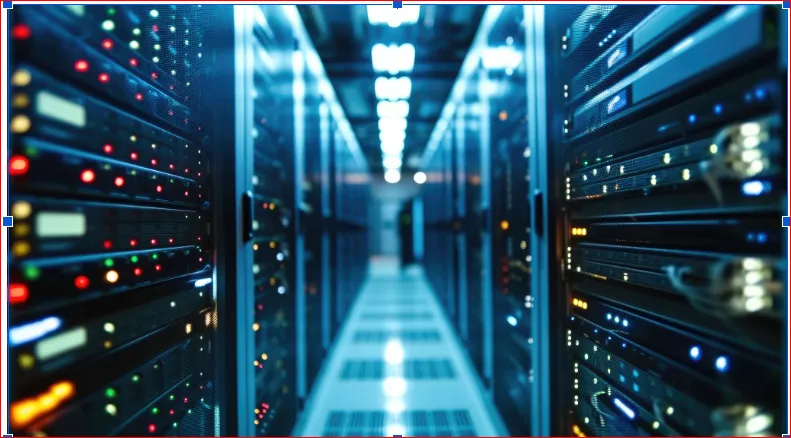
According to IBM, a data center is a physical room, building, or facility that houses information technology (IT) infrastructure for building, running, and delivering applications and services. It also stores and manages the data associated with those applications and services.
The rapid expansion of artificial intelligence, cloud computing, and hyperscale data centers is transforming the United States’ digital infrastructure. However, the environmental consequences of this growth extend beyond electricity consumption and greenhouse gas emissions. Data centers also require water to maintain operating temperatures and indirectly depend on water used in electricity generation.
According to the Lawrence Berkeley National Laboratory’s United States Data Center Energy Usage Report, U.S. data centers consumed approximately 17 billion gallons of water directly in 2023, while their electricity requirements were associated with an estimated 211 billion gallons of indirect water consumption. These figures demonstrate why the environmental footprint of data centers must be evaluated beyond the physical boundaries of individual facilities.
Why Data Centers Need Water
Data centers contain thousands of servers and other computing equipment that generate substantial heat during operation. Cooling systems are necessary to maintain safe operating temperatures and prevent equipment failure.
Some facilities use evaporative cooling systems, which consume water as heat is released into the atmosphere. Others rely on air cooling, closed-loop liquid cooling, or hybrid systems designed to reduce water consumption. Water demand varies considerably depending on facility size, cooling technology, local climate, and operational conditions.
As the Pacific Institute explains in its analysis of data center water use, understanding the environmental impacts of these facilities requires examining both their direct cooling requirements and the water associated with electricity generation. Reducing water consumption at the facility does not necessarily eliminate the water demands associated with the electricity required to operate it.
The Hidden Water Footprint of Electricity Generation
One of the most important findings in recent research is that data centers can have substantial indirect water footprints.
In September 2026, the environmental nonprofit Ceres published Water Behind the Watts: The Hidden Risk of Powering Data Centers, examining electricity-related water demand associated with data centers across Virginia, Texas, California, Illinois, Georgia, Ohio, and Arizona. The report estimated that electricity production associated with data centers in these seven states depends on approximately 3.4 trillion gallons of freshwater annually under its accounting framework.
The analysis also found that many power plants supplying electricity operate in regions experiencing water stress or drought. This creates an important challenge for environmental planning: the water impacts of a data center may occur far from the facility itself.
It is also important to distinguish water withdrawal from water consumption. Water withdrawn for power generation may be returned to its source, while water consumed through evaporation or other processes is not immediately returned. Consequently, estimates based on different water-accounting methods should not be treated as interchangeable.
Texas: Data Center Expansion Raises Regulatory Concerns
Texas has emerged as a major center of data center development, attracting investment in artificial intelligence infrastructure and associated electricity generation. However, concerns about electricity demand, water availability, and environmental impacts have prompted increased regulatory scrutiny.
On September 21, 2026, Governor Greg Abbott directed the Texas Commission on Environmental Quality to halt data center-related permitting while state agencies reviewed electricity and water-resource impacts. Despite the directive, an October 19 investigation by FracTracker Alliance and Public Citizen identified 35 regulatory actions involving data center-related projects after the announced pause.
The actions included construction stormwater authorizations, air-emission certifications, public notices, and applications advancing through regulatory review. The findings raise questions about permitting transparency, infrastructure development, and the effectiveness of environmental oversight.
Water-Stressed States Face Growing Challenges
The environmental implications of data center development vary across the United States. In Arizona, prolonged drought and pressure on Colorado River water supplies have intensified concerns about new industrial water demand.
In Texas, rapid infrastructure expansion has increased scrutiny of groundwater availability, municipal water systems, and electricity generation.
Virginia, home to one of the world’s largest concentrations of data centers, faces questions about the cumulative effects of infrastructure development and resource demand.
Georgia, California, Ohio, and Illinois are also important locations for assessing the relationship between expanding data center infrastructure and regional water resources.
The Ceres assessment of electricity-related water risks highlights the importance of evaluating data center expansion in the context of regional water availability and the characteristics of electricity generation. Although data centers account for a relatively small share of national water use, their effects can become significant where facilities are concentrated in communities with limited water supplies.
Emerging Solutions: Can Data Centers Be Cooled Without Water?
As concerns about data center water consumption grow, researchers are developing alternative cooling technologies that reduce or eliminate reliance on freshwater. These include air-based cooling, immersion cooling using electrically nonconductive fluids, closed-loop direct-to-chip cooling, and advanced two-phase cooling systems.
The U.S. Department of Energy’s COOLERCHIPS program is supporting research into energy-efficient cooling technologies for high-performance data centers. In 2026, the department advanced its efforts to develop water-free cooling systems capable of managing the increasing heat generated by artificial intelligence infrastructure.
Among the emerging technologies, IBM is developing a two-phase cooling system that circulates electrically insulating coolant through components attached to high-performance processors. The technology is designed to reduce cooling energy requirements and potentially eliminate onsite cooling-water consumption.
Similarly, Sandia National Laboratories has investigated immersion cooling, in which computing equipment is submerged in a specialized nonconductive liquid that absorbs heat. When combined with dry heat-rejection systems, this approach can avoid the evaporative water losses associated with conventional cooling towers.
These innovations could significantly reduce the freshwater footprint of future data centers. However, their environmental benefits depend on energy requirements, coolant characteristics, local climate, equipment compatibility, and how heat is ultimately released into the environment.
Recommendations for Sustainable Data Center Development
Improve water-use transparency. Data center operators should disclose direct water withdrawals, consumption, cooling technologies, and relevant electricity-related water impacts.
Strengthen cumulative-impact assessments. Environmental reviews should consider the combined demands of multiple facilities within the same watershed or municipal water system.
Encourage water-efficient technologies. Operators should evaluate cooling systems that reduce freshwater consumption, particularly in water-stressed regions.
Protect community water resources. Facility development should account for existing residential, agricultural, and ecological water requirements.
Integrate GIS into infrastructure planning. Geospatial assessments should help identify suitable development locations and areas requiring additional environmental safeguards.
Expand environmental monitoring. Regulators should strengthen monitoring of water withdrawals, groundwater conditions, surface-water availability, and potential impacts on surrounding communities.
The Path Forward
The expansion of artificial intelligence infrastructure presents significant opportunities for technological innovation and economic development. However, sustainable growth requires a better understanding of the environmental resources supporting digital infrastructure. Water availability, electricity generation, climate conditions, and community needs must be considered together rather than evaluated as separate issues.
As the United States continues expanding its data center infrastructure, transparent environmental information and integrated resource planning will be essential to balancing technological advancement with long-term water security.
The future of artificial intelligence should be measured not only by computing power but also by how responsibly the natural resources that support that power are managed.
ISRION INTERNATIONAL LTD: The Catalyst for Sustainable Change.
Independent analysis of environmental consulting, geospatial intelligence, engineering, and sustainable solutions for environmental management.